

News Today in the World 2025: Economy on the Rise.In 2025, the global economy faces a host of headwinds—geopolitical tensions, supply chain bottlenecks, inflationary pressures—but it is becoming increasingly clear that News Today in the World 2025: Economy on the Rise might be more than just an optimistic tagline. While some nations are already gaining strong momentum, others remain mired in stagnation or crisis. In this article, we will dissect how the world economy is tentatively advancing toward a rise in 2025, where persistent obstacles lie ahead, and what strategic choices could cement that ascent.
1. Global Growth and Trends
1.1 The Middle Ground of Growth
Forecasts for 2025 generally point to moderate global growth—neither spectacular nor disastrous. Many economies are under pressure from external shocks, policy uncertainty, and uneven recoveries. The World Bank has adjusted numerous country forecasts downward, attributing the cuts to trade tensions and volatile commodity markets.
Within this context, News Today in the World 2025: Economy on the Rise becomes a cautious but not unreasonable narrative—if more countries can shift from inertia to momentum. Yet the fact that about 60–70% of projections have been trimmed signals just how fragile this “rise” remains.
1.2 Divergence and the Uneven Recovery
Not every region or country is participating equally in the upturn. Some economies—especially in Asia and parts of Africa—are showing more vitality, while others in Latin America or parts of Europe are lagging. This divergence suggests that the “rise” will not be monolithic; rather it will be fragmented, with pockets of strong recovery and zones of continued struggle.
Thus, in many ways, News Today in the World 2025: Economy on the Rise is a headline for some, but not for all.
2.News Today in the World: Major Positive Drivers
(a) Asia’s Momentum and Global Ripple Effects
Asia remains the powerhouse of growth in 2025. Countries such as India, Vietnam, Indonesia, and even parts of Southeast Asia are posting faster-than-expected expansions thanks to strong domestic demand, infrastructure investment, and technology adoption. Their success supports the narrative of Economy on the Rise, especially when export chains and regional demand interplay.
As these Asian economies accelerate, they can pull up global averages, reinforce trade linkages, and attract more capital inflows, further amplifying positive momentum.
(b) Upgraded Projections from IMF and Institutions
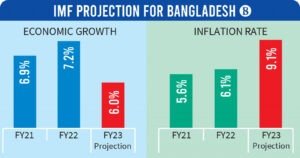
In mid-2025, the IMF issued a stronger projection—raising 2025 global growth to around 3.0%, with a further 3.1% in 2026. This upward revision is significant: it reflects greater confidence in front-loaded investment, easing tariff pressures, and improving credit conditions. Institutional endorsements like this lend credibility to News Today in the World 2025: Economy on the Rise by showing that leading economic bodies see real upside.
Beyond the IMF, organizations like the OECD and regional development banks have also nudged their forecasts upward, signaling that downside risks are being reevaluated downward in some quarters.
(c) Innovation, Technology & Green Transitions
One of the strongest engines fueling optimism is technological innovation. AI, automation, renewable energy, digitalization, biotech—these are not just buzzwords but real growth levers. Countries investing heavily in these sectors can see productivity boosts, new export opportunities, and higher-value industry clustering.
Green energy, in particular, offers a dual benefit: combating climate change while creating jobs and economic opportunities. As nations shift toward cleaner grids, energy storage, and sustainable infrastructure, these sectors could become powerful growth multipliers. In such scenarios, “Rise” is not just cyclical but structural.
(d) Capital Flows & Private Investment
Emerging and frontier markets that successfully attract foreign direct investment (FDI) and private capital stand to gain significant advantages. In 2025, we see increased interest in renewable energy, digital infrastructure, and health sector investments. When capital flows into productive sectors, it accelerates growth and helps deliver on the promise behind News Today in the World 2025: Economy on the Rise.
3. News Today in the World:Challenges & Negative Headwinds
(a) Escalating Trade Wars & Protectionism
Several major economies have ramped up tariffs and non‑tariff barriers in 2025 to protect domestic industries. While politically appealing at home, such protectionism dampens global trade volumes, weakens export-oriented economies, and reduces efficiency in global supply chains. These actions cut at the foundations of a synchronized global rise.
(b) Heavy Debt Loads & Fiscal Stress
Many countries enter 2025 burdened by high sovereign debt and persistent fiscal deficits. Interest rate hikes or currency volatility can push debt servicing costs higher, crowd out growth‑stimulating investment, and lead to sovereign stress. Thus, what could have been a rebound becomes precarious for heavily indebted nations.
(c) Geopolitical Risks & Supply Chain Fragility
Tensions in the Middle East, East Asia, or Eastern Europe remain lurking risks. Any flare-up can disrupt oil markets, shipping lanes, commodity pricing, or investor confidence. Supply chain fragility—exposed during the pandemic—remains a major constraint. These factors inject negative sentiment and threaten to derail a fragile ascent.
(d) Inflation, Wage Pressures & Cost Shocks
Persistent inflation—especially in energy, food, and logistics—erodes real incomes and consumer purchasing power. Wage demands may intensify, leading to wage‑price spirals. For many economies, the balancing act between growth and inflation control becomes tighter, limiting downside room.
(e) Climate, Disasters & Extreme Events
Climate change is no longer a distant risk—it’s a real-time constraint. Droughts, floods, storms, and supply disruptions to agriculture or energy systems can sap growth, divert resources for disaster relief, and stall momentum. These shocks often hit developing economies hardest, reinforcing inequality and undermining resilience.
4.
News Today in the World:Projections & Growth Estimates
Analysts place 2025 global growth estimates in a range from 2.3% to 3.0%, depending on assumptions and region.
-
The World Bank’s mid‑2025 update trimmed forecasts to ~2.3%, citing risk, trade friction, and uneven recoveries.
-
The OECD revised its outlook to ~2.9%, reflecting that policy easing and capital flows may offset headwinds.
-
The IMF’s upward adjustment to 3.0% stands out as the most optimistic.
-
Regional forecasts vary widely: Asia may grow at 4–5%, Latin America at 1–2%, Europe around 1.5–2%, and Africa in between, depending on commodity cycles and institutional reform.
This variability underscores a critical point: News Today in the World 2025: Economy on the Rise is possible, but only for those economies that navigate risks effectively.
5.News Today in the World:Country-Level Illustrations
- (a) India: A Beacon of Growth
India’s 2025 growth outlook—often revised upward to ~6.5–6.7%—is supported by strong domestic demand, tax reform, infrastructure spending, and tech sector dynamism. Its success becomes a key testimonial for the “Rise” narrative. India’s role in driving regional supply chains and its demographic dividend make it one of the most compelling growth engines in 2025.
(b) United Kingdom: Inflation Tensions
The UK is projected to face one of the highest inflation rates among major economies in 2025, estimated near 3.5%. This inflation erodes real wages and may dampen consumer confidence. Even if growth is positive, the cost-of-living squeeze could overshadow gains. The “Rise” story for the U.K. will depend on how inflation is controlled and whether growth is equitable.
(c) United States: Moderate but Pressured
For the U.S., growth forecasts hover near 1.8%. Tariffs, demographic constraints, slower immigration, and policy uncertainty weigh on expansion. While the U.S. remains central to global demand, its “Rise” narrative is less dramatic—more about stability than breakout growth. Its performance is critical to sustaining global confidence.
(d) Emerging & Frontier Markets: Opportunity & Risk
Countries in Africa, Latin America, and parts of the Middle East face both great opportunity and risk. If reforms are enacted, capital is attracted, and commodities stabilize, some of these nations might post robust growth. But if they remain heavily dependent on commodity cycles or suffer from political instability, their trajectories may lag behind the global “Rise.”
6.News Today in the World:Why We May Call It a “Rise”
-
Recovery Beyond Stagnation: After years of pandemic, inflation, and regional shocks, many countries are moving out of stagnation and finding renewed momentum.
-
Institutional Confidence: Revisions upward by IMF, OECD, and other institutions lend credibility to the upward narrative.
-
Structural Levers: Innovation, green transitions, and digitalization promise not just cyclical bouncebacks but structural growth tailwinds.
-
Capital & Trade Reinvigoration: As trade barriers ease or stabilize and capital returns, global engines restart.
Even if the rise is modest or inconsistent, the phrase Economy on the Rise is more justifiable now than at the start of 2024.
7.
News Today in the World:Caution & Strategic Advice
(a) Policy Coordination is Vital
Countries must resist protectionism and promote open trade frameworks. Multilateral cooperation on tariffs, standards, and investment rules is key to sustaining upward momentum.
(b) Prudent Debt & Fiscal Management
High-debt countries should prioritize structural reforms, efficient revenue collection, and targeted spending. A sudden interest rate shock or currency devaluation could unravel fragile gains.
(c) Build Resilience
Diversify supply chains, maintain buffers, invest in emergency preparedness, and foster local capacity to absorb shocks. Resilient economies can withstand disruptions and sustain trends.
(d) Focus on Innovation & Inclusive Growth
Growth that does not include broad segments of society breeds discontent. Policies to spread technology, close inequality, and enhance human capital are essential. The “Rise” must not leave many behind.
(e) Monitor Risks & Tailwinds
Keep an eye on inflation, commodity swings, geopolitical flashpoints, and climate events. A small disruption can cascade. At the same time, leverage new opportunities in green energy, AI, health technology, and other frontier sectors.
8. Conclusion
News Today in the World 2025: Economy on the Rise is a plausible and optimistic headline. The global economy in 2025 is straddling a turning point—neither deeply in recession nor surging unchecked. Many regions show encouraging signs, while others remain constrained by structural and cyclical challenges.
If nations adopt smart policy, support innovation, maintain fiscal discipline, and cooperate globally, this “rise” could become more than rhetoric—it could become reality. But the journey is uneven, the risks are real, and success is far from guaranteed.