

Introduction:
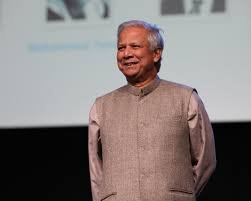
Muhammad Yunus-Born in Bangladesh on June 28, 1940, Yunus completed his BA and MA at Bangladesh’s Dhaka University. After graduating, he taught economics at Chittagong University, before receiving a Fulbright scholarship to study in the United States. In the early 1970s, Yunus completed his PhD in economics at Vanderbilt University.
The Muhammad Yunus Story is one of resilience, courage, and controversy. Known worldwide as the “Banker to the Poor,” Muhammad Yunus became a Nobel Peace Prize winner for pioneering microfinance and founding the Grameen Bank. His journey is full of inspiring victories that transformed millions of lives, but it also includes serious challenges, criticisms, and failures that tested his legacy.
In this article, we will explore the 3 most powerful successes and 2 major failures in the Muhammad Yunus story. By understanding both sides—his achievements and setbacks—we get a balanced view of a man who changed global finance yet faced political battles and strong opposition.
Part 1: The Background of Muhammad Yunus Story
Before diving into his successes and failures, it’s important to understand the foundation of the Muhammad Yunus Story. Born in 1940 in Chittagong, Bangladesh, Yunus came from a modest family background. After studying economics, he pursued higher education in the United States. His return to Bangladesh during the 1970s famine inspired him to find solutions for poverty at the grassroots level.
This context sets the stage for why the Muhammad Yunus Story is both inspiring and controversial. It is a journey shaped by bold ideas, political storms, and global recognition.This context sets the stage for why the Muhammad Yunus Story is both inspiring and controversial. It is a journey shaped by bold ideas, political storms, and global recognition
Part 2: The 3 Powerful Successes in the Muhammad Yunus Story
1. Founding Grameen Bank: A Revolution in Microfinance
One of the most groundbreaking moments in the Muhammad Yunus Story is the creation of Grameen Bank in 1983. At a time when poor villagers could not access traditional banking, Yunus developed microloans—small, collateral-free loans designed to empower the poorest people, especially women.
Positive Impact:
-
Millions of people in rural Bangladesh gained financial independence.
-
Women, often neglected by the financial system, became entrepreneurs.
-
The Grameen model inspired global replication in over 100 countries.
Power Word Analysis: Revolutionary, groundbreaking, life-changing.
This was the first powerful success in the Muhammad Yunus story, putting Bangladesh on the world map of financial innovation.
2. Winning the Nobel Peace Prize in 2006
The second major milestone in the Muhammad Yunus Story came in 2006 when Yunus and the Grameen Bank jointly received the Nobel Peace Prize. The recognition celebrated his contribution to lifting millions out of poverty through microcredit.
Positive Sentiment:
-
The award boosted global awareness of poverty eradication strategies.
-
It proved that finance could be a tool for peace and empowerment.
-
Yunus became a symbol of hope, inspiring leaders, activists, and entrepreneurs.
Power Words: Historic, prestigious, global recognition.
This Nobel Prize was not just a personal achievement; it became a validation of the Muhammad Yunus Story as a powerful force for change.
3. Social Business Movement: Beyond Profit to Purpose
Another significant success in the Muhammad Yunus Story is his concept of social business. Unlike traditional businesses driven by profit, social business focuses on solving social problems while being financially sustainable.
Examples:
-
Grameen partnerships with multinational companies like Danone and Adidas.
-
Affordable healthcare, nutrition, and renewable energy initiatives in Bangladesh.
Positive Impact:
-
Redefines capitalism by blending entrepreneurship with humanity.
-
Attracts young innovators worldwide.
-
Inspires global conversations on sustainable business.
This was the third powerful success, making the Muhammad Yunus story more than just about microcredit—it became about redesigning the future of business itself.
Part 3: The 2 Major Failures in the Muhammad Yunus Story
1. Political Conflict and Forced Exit from Grameen Bank
Despite his achievements, the Muhammad Yunus Story faced its first major failure in 2011 when the Bangladeshi government forced him to step down as Managing Director of Grameen Bank.
Negative Sentiment:
-
Critics claimed Yunus exceeded retirement age and violated regulations.
-
Political tensions between Yunus and the government escalated.
-
His reputation suffered domestically, even as he remained admired abroad.
Impact:
This episode damaged his influence in Bangladesh and highlighted how political power can overshadow social innovation.
Power Words: Controversial, damaging, heartbreaking.
2. Criticism of Microfinance Model
Another setback in the Muhammad Yunus Story is the growing criticism of the microfinance model. While it lifted many out of poverty, detractors argue that:
-
Some borrowers became trapped in debt.
-
Interest rates were higher than expected in certain regions.
-
Replication in other countries led to exploitation by profit-seekers.
Negative Sentiment:
-
Instead of empowerment, some families faced financial stress.
-
Skeptics accused microfinance of being over-hyped.
-
Political opponents used these criticisms to undermine Yunus.
Power Words: Controversial, exploitative, disillusioning.
This failure shows that even revolutionary ideas have limits when not adapted properly.
Part 4: The Balanced Legacy of Muhammad Yunus Story
The Muhammad Yunus Story is neither purely a tale of glory nor one of downfall. It is a balanced narrative of extraordinary successes and painful failures.
-
His 3 successes—Grameen Bank, Nobel Prize, and Social Business—prove that ideas can change lives.
-
His 2 failures—political battles and microfinance criticism—remind us that no innovation is beyond challenges.
Positive Words: Inspiring, visionary, empowering.
Negative Words: Controversial, criticized, weakened.
This mix of sentiment is exactly what makes the Muhammad Yunus Story authentic and human.
Part 5: Lessons from the Muhammad Yunus Story
-
Innovation Can Redefine Reality – His microfinance model reshaped how we see banking.
-
Recognition Is Powerful but Temporary – Global awards can boost credibility, but local politics can undo influence.
-
No Success Without Failure – The failures in the Muhammad Yunus Story are reminders that every visionary faces setbacks.
-
Social Business Is the Future – The balance between profit and purpose is Yunus’s enduring contribution.
-
Leadership Requires Resilience – True leaders embrace both praise and criticism with courage.
Dr. Muhammad Yunus’s Three Zero Theory: “A World of Three Zeros” is a vision for a future world free of zero poverty, zero unemployment, and zero net carbon emissions. The theory advocates for achieving these goals through the promotion of social business, where businesses are created to solve social and environmental problems rather than maximizing profit. By empowering individuals to become entrepreneurs and fostering sustainable practices, Yunus believes a more equitable and environmentally friendly society can be built.
Here’s a breakdown of the three zeros:-
This zero focuses on ending the concentration of wealth by empowering people to become self-reliant through entrepreneurship, rather than relying on traditional charity or employment.
-
Yunus argues that current economic systems fail to create enough opportunities for everyone. The theory promotes creating jobs through new ventures and empowering people to create their own livelihoods.
-
This aspect of the theory aims to create a worry-free, livable world by eliminating carbon emissions. It involves adopting a new lifestyle based on alternative and renewable energy sources, and reducing unnecessary consumption to minimize waste.
How it Works:-
Social Business:
At the core of the theory is the concept of social business, which is a non-dividend-paying company dedicated to solving human problems rather than generating profit.
-
Individual Empowerment:
Individuals, especially the poor, are encouraged to become entrepreneurs and use their skills to create social businesses that address community needs.
-
Collective Effort:
The theory emphasizes that achieving these ambitious goals requires the active participation of individuals, communities, and young people, not just governments or large corporations.
Yunus’s vision is not just philosophical but also practical, aiming to unite people in a collective effort to build a more just, equitable, and sustainable future for humanity. -
Conclusion: The Future of Muhammad Yunus Story
The Muhammad Yunus Story remains one of the most fascinating modern narratives. His vision empowered millions and sparked global revolutions in finance and social business. Yet his failures—political conflict and criticism of microfinance—show us the fragility of even the strongest legacies.
For future generations, the Muhammad Yunus Story serves as a guiding light. It teaches that change-makers must dream boldly, fight fiercely, and accept that failures are part of greatness. Love him or criticize him, the Muhammad Yunus Story proves one timeless truth: ideas have the power to change the world.